Daily drop
Inspired by the thrill of daily surprises and the seamless flow of digital rewards, Daily Drop balances excitement with simplicity, turning routine moments into memorable experiences.
Designing delight into everyday use
Benjaminis a fintech app that turns everyday routines into rewarding moments helping users earn cashback by linking their cards, shopping, playing games, or scanning receipts. Most of the experience was built around transactional loyalty, rewarding users after a qualifying action.
But we wanted something more. Something that didn’t just reward behavior, but created it. Something unexpected.
That was the spark behind Daily Drop a new kind of feature built not on transactions, but on emotion. A moment of daily surprise where users swipe to reveal a digital card. Unlike anything we had built before, Daily Drop wasn’t about mechanics. It was about feeling. As the product designer behind it, my task wasn’t just to make it functional it was to make it feel exciting, immersive, and truly special.
Creating a daily ritual worth returning for
Benjamin already had functional systems in place. You shop, scan, or play and earn. But this was different. We wanted a reason for users to return every day, even when they had nothing to scan, no game to play, and no new purchases. It needed to feel exciting but not gimmicky; Be rewarding, even when it didn’t give out real cash; Align with business needs, balancing engagement with sustainability.
But the biggest challenge? This had to feel like nothing else in the app.
I explored several interaction models early on but they either felt too passive or not natural. One of the more ambitious iterations was a ‘peel to reveal’ interaction, inspired by physical scratch cards. While the concept felt novel, the development cost was high and the interaction didn’t feel as intuitive in testing users found it less natural and more time-consuming. After testing quick prototypes and gathering internal feedback, I leaned into a tactile swiping gesture instead, which struck the right emotional note: familiar, satisfying, and just suspenseful enough.
Does it feel special?
I started from the inside out. Before pixels, I asked: What does it feel like to peel back a mystery? To reveal a surprise? The UX came first no visual UI yet.
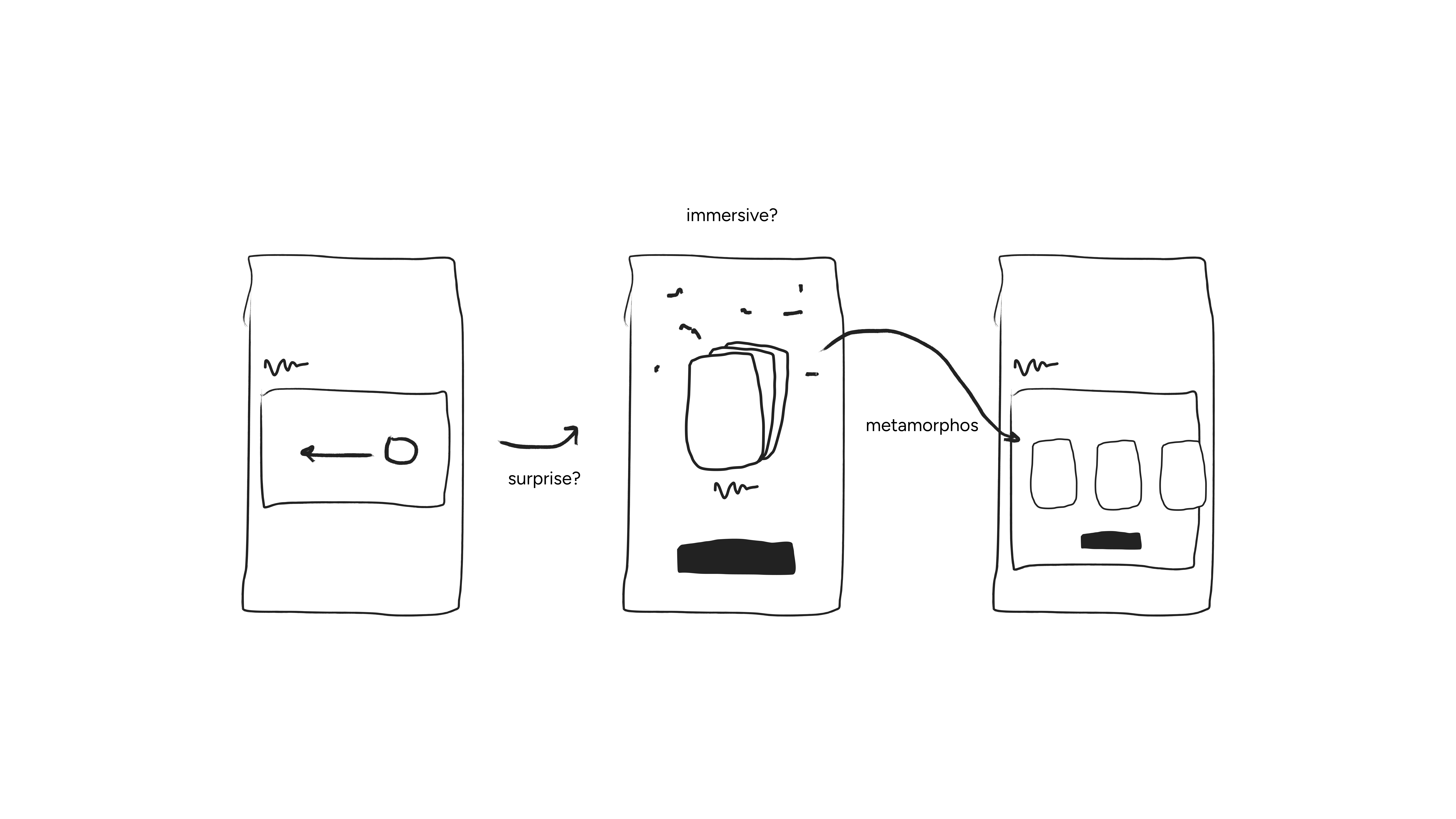
I storyboarded interactions. How would the user flow from opening the app to swiping their Daily Drop? What would anticipation feel like? What feedback did we give when the drop wasn’t a win?
This led to:
- A swiping mechanic for interaction
- Subtle animations to create suspense before reveal
- A rotating reward system to prevent fatigue
Seamless, yet distinct!
Once the skeleton felt right, I moved to UI. The challenge here was visual consistency vs novelty: It had to feel Benjamin, but also stand apart. Cards. Colors. Fonts. Micro-interactions. I designed UI elements that matched what we had in the app already while introducing richer textures and layers and micro-interactions that feels natural and added delight.
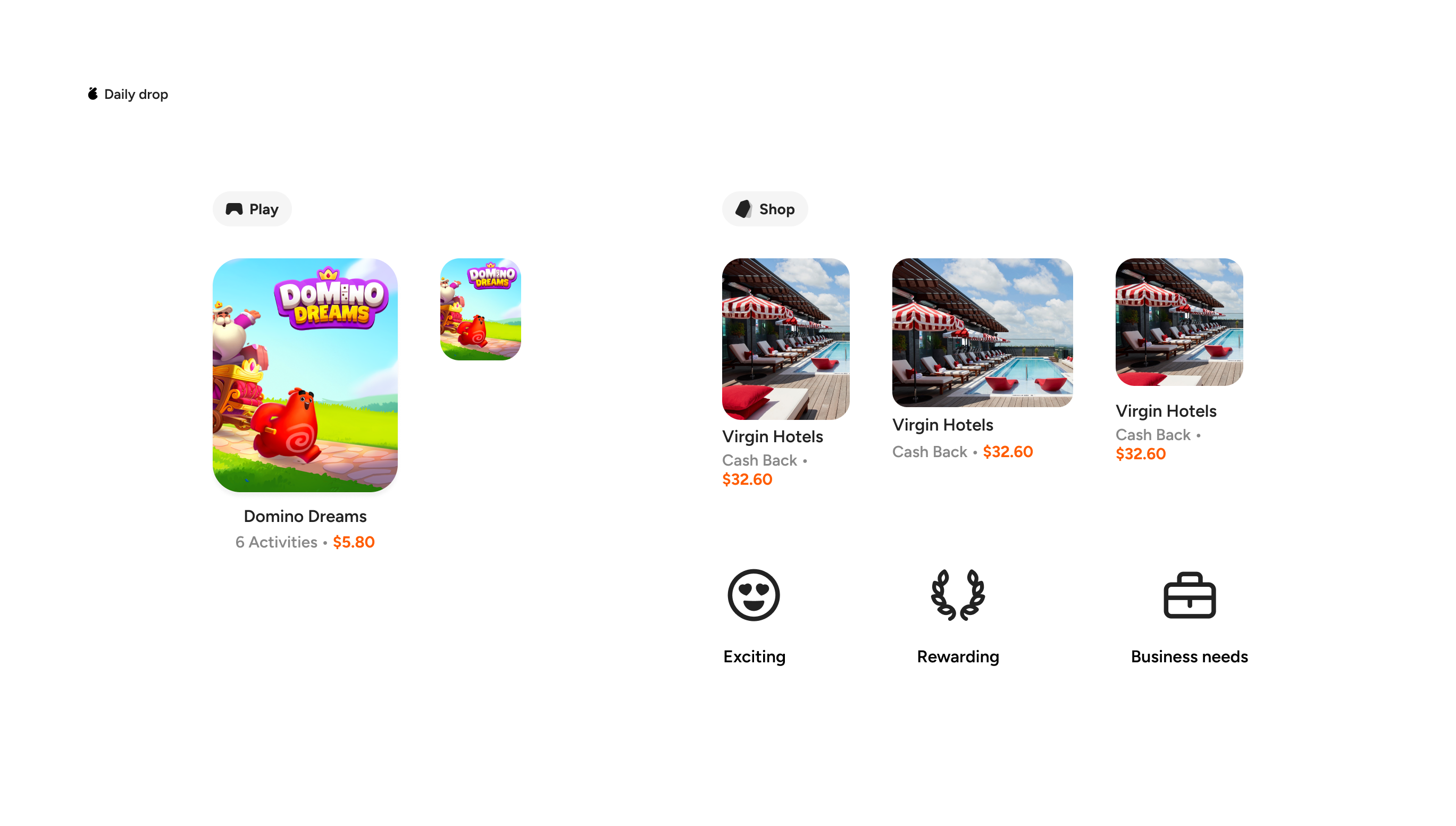
When user gets offers from selected merchants.
The daily reward system had to work across our different offerings, and be adaptable for each. Merchant offers, Games, and Cash rewards.
When user gets game offers.
The intent was to make the experience fluid which informed my decision to use a morphing style animations and micro-interactions to keep the users immersed throughout the experience.
Users have the opportunity to explore all games that the offer applies to.
While deciding on the expereince to revaeal cash rewards, I went with a number counter-type to keep the users excited to see where the counting is going to stop, and while claiming the reward it counts down to complete that experience cycle.
When user gets a surprise reward.
A unique build in production
Daily Drop is still in production as of now, but it’s already changed how we think about engagement. It’s not just a feature, it’s a feeling. We wanted to build something memorable, something users would return for not because they had to, but because they wanted to. And the Daily Drop is that space, an unexpected moment of reward that turns habit into happiness.
Reflections as the designer
This was one of the most distinct experiences I’ve designed at Benjamin. It pushed me to rethink utility-driven UX. It taught me how to build engagement through emotion, not just features. It reminded me that joy, surprise, and delight are just as important as functionality. And most importantly, it proved that sometimes, the most powerful design work doesn’t just get things done—it makes people feel something.